A child's communication skills aren't developed in isolation. The environment they grow up in — the sounds they hear, the conversations around them, the people they interact with, and the spaces where they play — all contribute to how they learn to understand and use language. Research consistently shows that the richness of a child's language environment is one of the strongest predictors of their communication outcomes.
The Home Environment: Where It All Begins
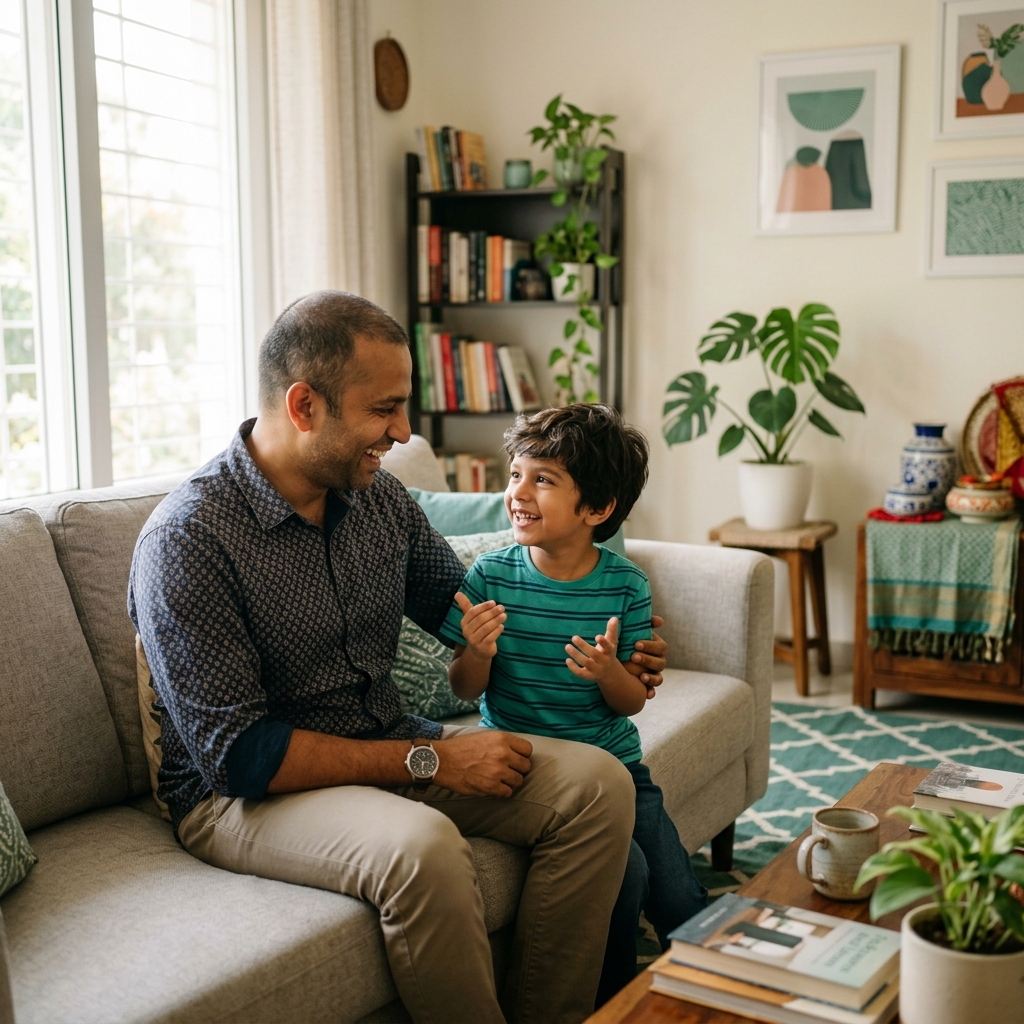
Home is the first and most influential environment for a child's communication development. The language children hear at home during their first few years forms the foundation for everything that follows — vocabulary, grammar, narrative skills, and social communication.
Did you know? A landmark study by Hart and Risley found that children from language-rich homes heard approximately 30 million more words by age 3 than children from language-poor homes. This "word gap" significantly predicted academic performance at age 9.
What Makes a Language-Rich Home?
A language-rich home doesn't require expensive toys or special programs. It's characterised by:
- Frequent conversation: Parents who talk to, with, and around their children throughout the day
- Responsive communication: Adults who respond to a child's attempts to communicate — even babbles and gestures
- Shared reading: Regular story time with interactive questions and discussions
- Varied vocabulary: Using descriptive, precise words rather than always simplifying
- Limited screen time: Prioritising face-to-face interaction over passive media consumption
The Kitchen as a Language Lab
Some of the best language learning happens in the most ordinary moments. The kitchen, for example, is a remarkably effective communication classroom:
- Vocabulary: Names of ingredients, utensils, actions (stir, pour, chop, mix, sprinkle)
- Sequencing: "First we crack the eggs, then we add the flour, then we stir"
- Describing: "This is hot, that is cold, this feels sticky, that smells sweet"
- Problem-solving: "We don't have butter — what else could we use?"
The School and Social Environment
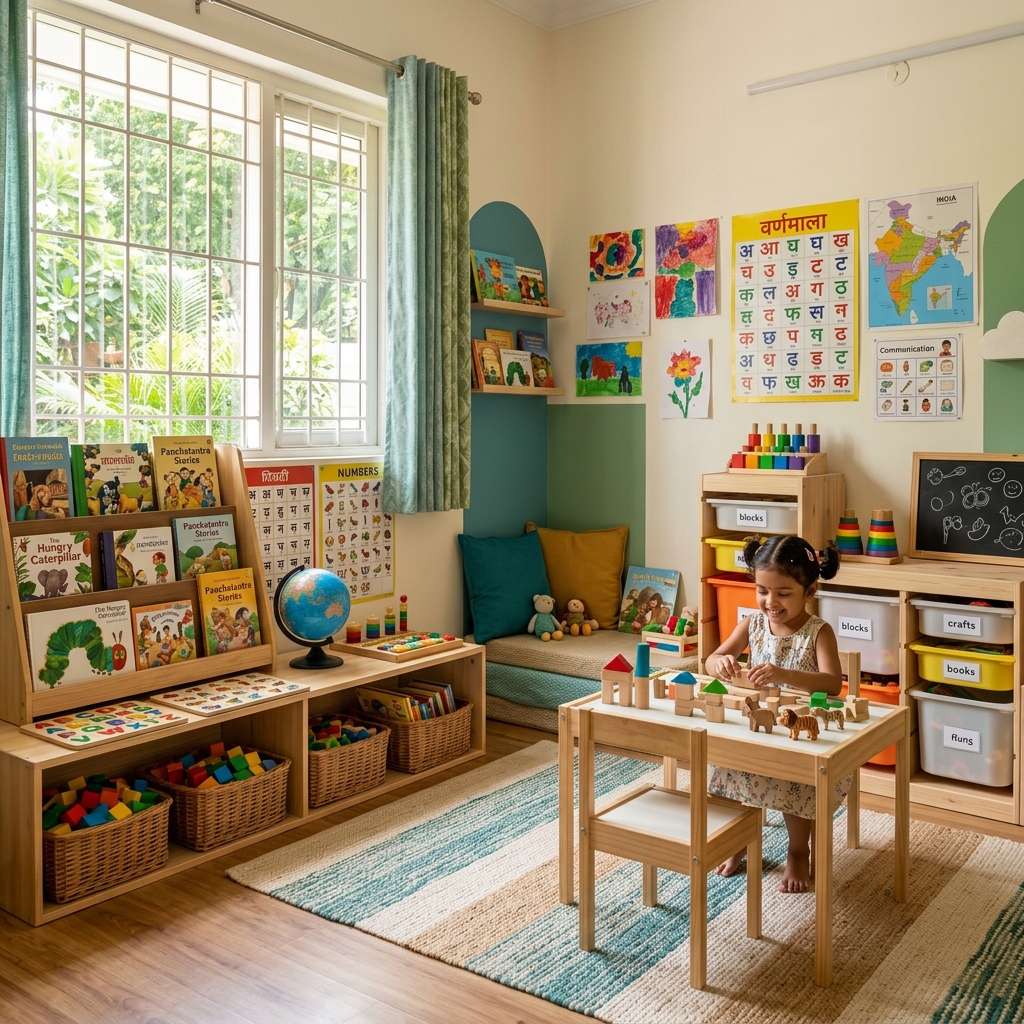
When children enter daycare, preschool, or school, they encounter a dramatically different communication environment. They must navigate conversations with unfamiliar adults, negotiate with peers, follow group instructions, and express themselves in structured settings.
Peer Interaction Drives Communication
Interaction with other children is uniquely valuable for language development. Unlike adults, peers don't automatically fill in gaps or interpret unclear messages. This means children are motivated to communicate more clearly when talking with other children.
Play-based interactions teach children to:
- Negotiate roles and rules ("I'll be the doctor, you be the patient")
- Resolve conflicts using words rather than actions
- Tell stories and share experiences
- Ask questions and listen to answers
- Adapt their communication style to different listeners
The Role of Technology
Technology is an inescapable part of modern environments, and its impact on communication development is nuanced. The key distinction is between passive consumption and interactive engagement.
| Passive (Less Beneficial) | Interactive (More Beneficial) |
|---|---|
| Watching YouTube endlessly | Video-calling grandparents with parent guidance |
| Auto-playing cartoons | Watching one episode together and discussing it |
| Solo tablet games | Interactive story apps where the child responds |
| Background TV noise | Music and songs with parent-led sing-alongs |
The American Academy of Pediatrics recommends no screen time before 18 months (except video calls) and limited, co-viewed screen time from 18 to 24 months. For children aged 2-5, the recommendation is one hour per day of high-quality programming, ideally watched together.
Bilingual and Multilingual Environments
Many families in Bangalore and across India raise children in bilingual or multilingual environments. Far from being a hindrance, bilingualism offers cognitive advantages including better executive function, metalinguistic awareness, and cognitive flexibility.
However, managing multiple languages requires intentionality:
- Consistency matters: Strategies like "one parent, one language" or "home language vs. school language" help children organise their language systems
- Both languages need input: Children need rich exposure to each language, not just one dominant language
- Code-mixing is normal: Using words from both languages in a single sentence is not a sign of confusion — it reflects linguistic sophistication
Creating an Optimal Communication Environment
Based on decades of research, here are the key principles for creating an environment that supports strong communication development:
- Be present and responsive: The single most important factor is consistent, warm, responsive interaction
- Reduce background noise: Constant TV or device noise competes with meaningful language input
- Create routine talk times: Mealtimes, car rides, and bedtime are natural conversation opportunities
- Provide varied experiences: Trips to the park, market, library — each introduces new vocabulary and conversational contexts
- Accept and expand: When your child communicates, validate their attempt and build on it
Want to Optimise Your Child's Communication Environment?
Our team at Rapture Therapy Centre can help you identify environmental factors that may be supporting or hindering your child's communication growth, and create a personalised plan to strengthen their skills.
Schedule a Consultation