Autism Spectrum Disorder (ASD) affects how children communicate, interact socially, and process sensory information. While every child on the spectrum is different, certain patterns often become more noticeable around the age of 3 — when language, play, and social expectations increase. Recognising the early signs of autism can help families seek timely support and intervention.
Important: The presence of one or two of these signs alone does not mean a child is autistic. Autism is a spectrum, and diagnosis requires a comprehensive evaluation by a qualified professional. If you have concerns, consult a pediatric developmental specialist or speech-language pathologist.
Communication and Language Signs
By age 3, most children are using 3–4 word sentences and have a vocabulary of several hundred words. Children showing signs of autism may present differently:
- Delayed or absent speech — the child may use fewer than 50 words, or may not be combining words at all
- Echolalia — repeating words, phrases, or entire scripts from TV shows or books rather than generating original language
- Pronoun reversal — saying "you want juice" instead of "I want juice"
- Unusual intonation — speech may sound monotone, sing-song, or robot-like
- Difficulty with conversation — may not respond to their name, answer simple questions, or engage in back-and-forth dialogue
- Loss of previously acquired words — regression in language skills, particularly between 15–24 months
Social Interaction Signs
Social communication is one of the core areas affected in autism spectrum disorder. At age 3, you might notice:
- Limited eye contact — the child may avoid looking at faces or make fleeting eye contact
- Lack of joint attention — not pointing at objects to share interest (e.g., pointing at a plane in the sky) or following your point
- Preference for solitary play — playing alone rather than alongside or with other children
- Difficulty reading emotions — not responding to another person's smile, tears, or distress
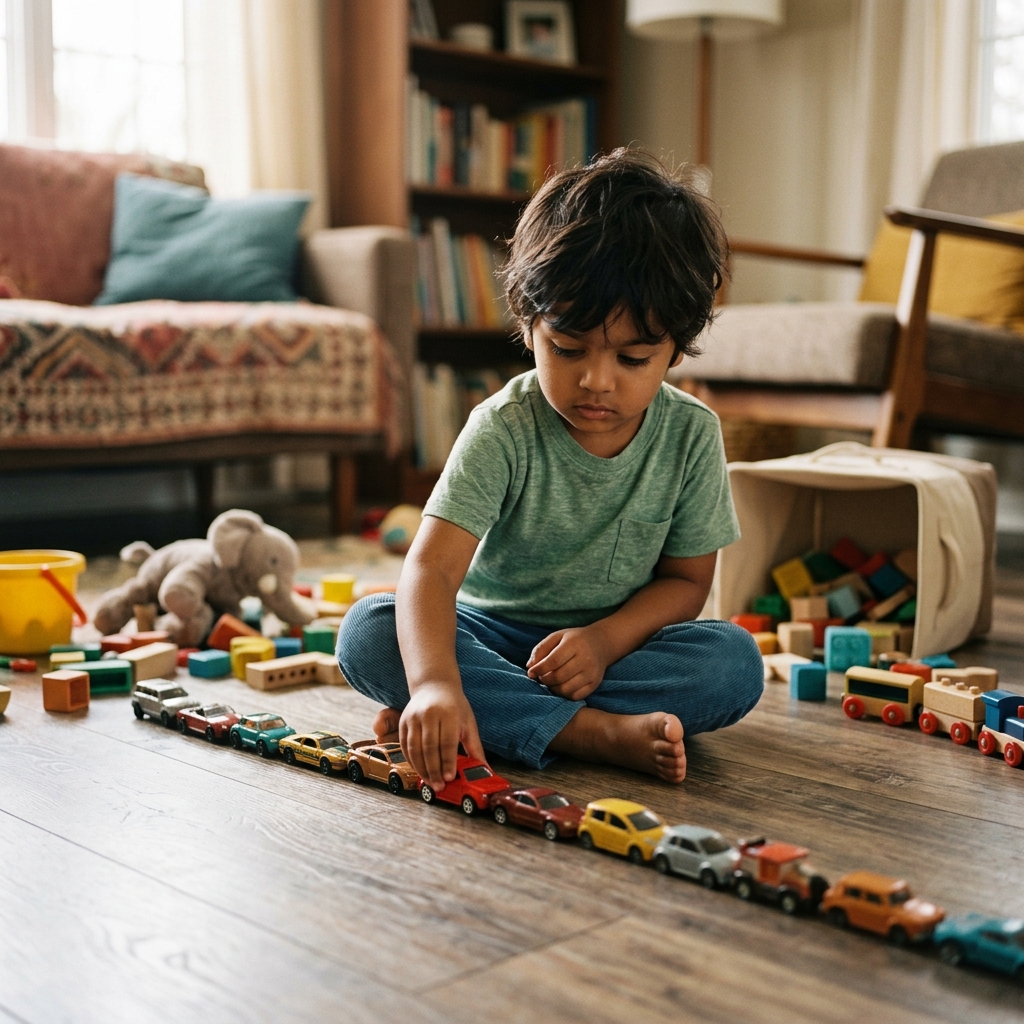
- Limited imaginative play — may line up toys or spin wheels rather than engaging in pretend play (e.g., feeding a doll, cooking in a toy kitchen)
- Not sharing enjoyment — rarely bringing toys to show parents or looking for a reaction when doing something exciting
Repetitive Behaviours and Restricted Interests
Children on the autism spectrum often display repetitive behaviours that may become more apparent by age 3:
- Stimming — repetitive movements such as hand-flapping, rocking, spinning, or toe-walking
- Rigid routines — becoming very distressed with changes in routine, even minor ones (e.g., a different route to the park)
- Intense, narrow interests — fixating on a specific topic, object, or part of an object (e.g., only playing with the wheels of a car)
- Repetitive play patterns — lining up objects in a specific order, opening and closing doors repeatedly
Sensory Processing Differences
Many autistic children experience the world differently through their senses. Common sensory signs in autism include:
- Hypersensitivity (over-responsive) — covering ears at everyday sounds, refusing certain food textures, distress with certain clothing fabrics or tags
- Hyposensitivity (under-responsive) — seeking intense sensory input such as crashing into furniture, mouthing objects beyond the typical age, or seeming not to notice pain
- Visual fascinations — staring at lights, spinning objects, or watching things from unusual angles
What Does This Look Like Day-to-Day?
Here are some practical examples of how these signs might present in a 3-year-old's daily routines:
| Situation | What You Might Notice |
|---|---|
| At the park | Plays alone, does not join other children, may run back and forth in the same pattern repeatedly, or focus on spinning the roundabout rather than riding it. |
| During meals | Eats only a very limited range of foods (same colour, texture, or brand). Becomes distressed if foods touch on the plate. |
| At home | Lines up toys in a specific order. May watch the same video clip on repeat. Becomes very upset if routine changes (e.g., different cup at breakfast). |
| With family | Does not respond when name is called. Does not point at things to show you. Limited facial expression or emotional response to others. |
| In noisy environments | Covers ears, cries, or tries to leave. May become overwhelmed at birthday parties, shopping centres, or crowded family gatherings. |
When Should You Seek an Assessment?
If you recognise several of these signs in your child, consider scheduling a developmental assessment. Early identification is key — research consistently shows that children who receive early intervention for autism make significantly greater gains in communication, social skills, and adaptive behaviour.
You should seek an assessment if your 3-year-old:
- Is not speaking in sentences or has very limited speech
- Does not respond to their name consistently
- Shows limited interest in other children
- Has lost previously acquired skills (language or social)
- Displays intense repetitive behaviours or very rigid routines
- Has significant sensory sensitivities that affect daily life
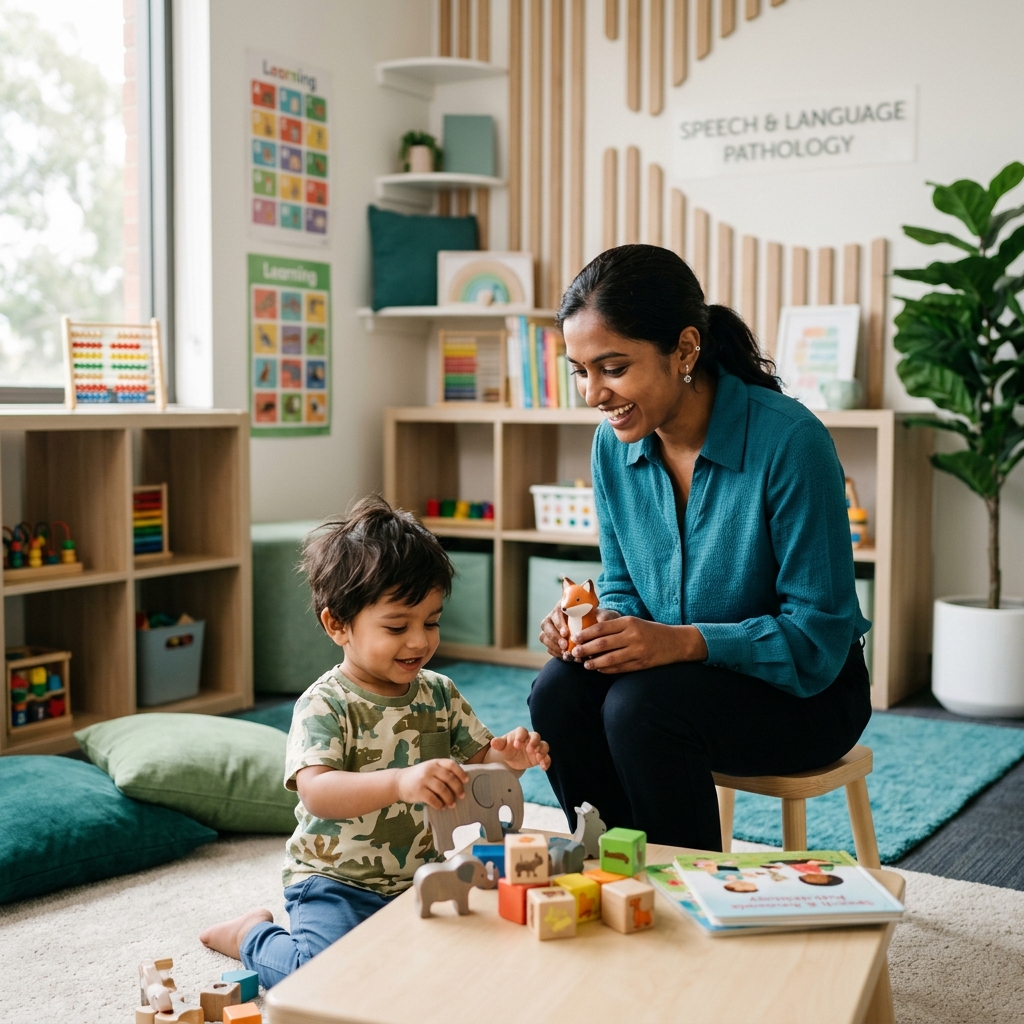
At Rapture Therapy Centre in Rajarajeshwari Nagar, Bangalore, our interdisciplinary team — including speech-language pathologists, occupational therapists, and special educators — provides comprehensive developmental assessments and individualised therapy programs for children on the autism spectrum.
Concerned About Your Child's Development?
Our experienced clinical team at Rapture Therapy Centre offers comprehensive developmental assessments for children showing signs of autism. Early intervention makes a real difference.
Book an Assessment