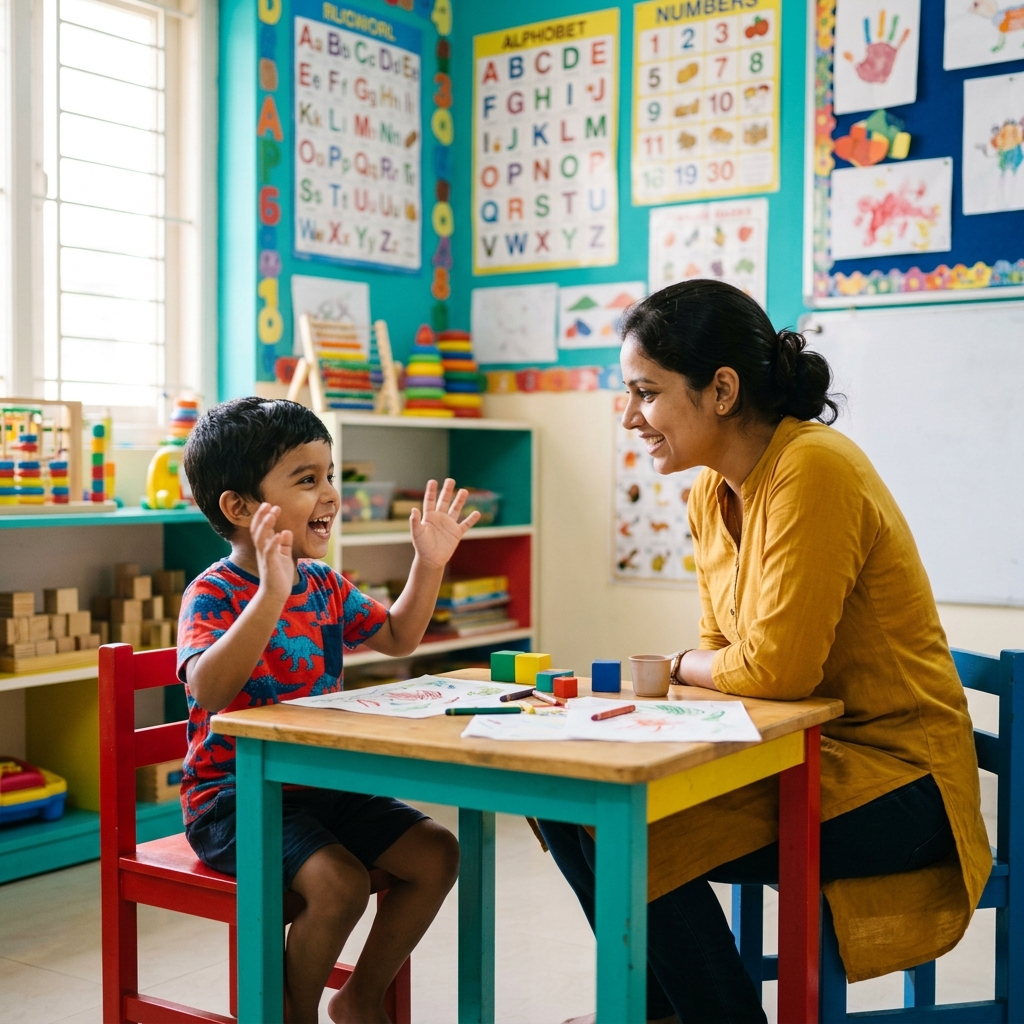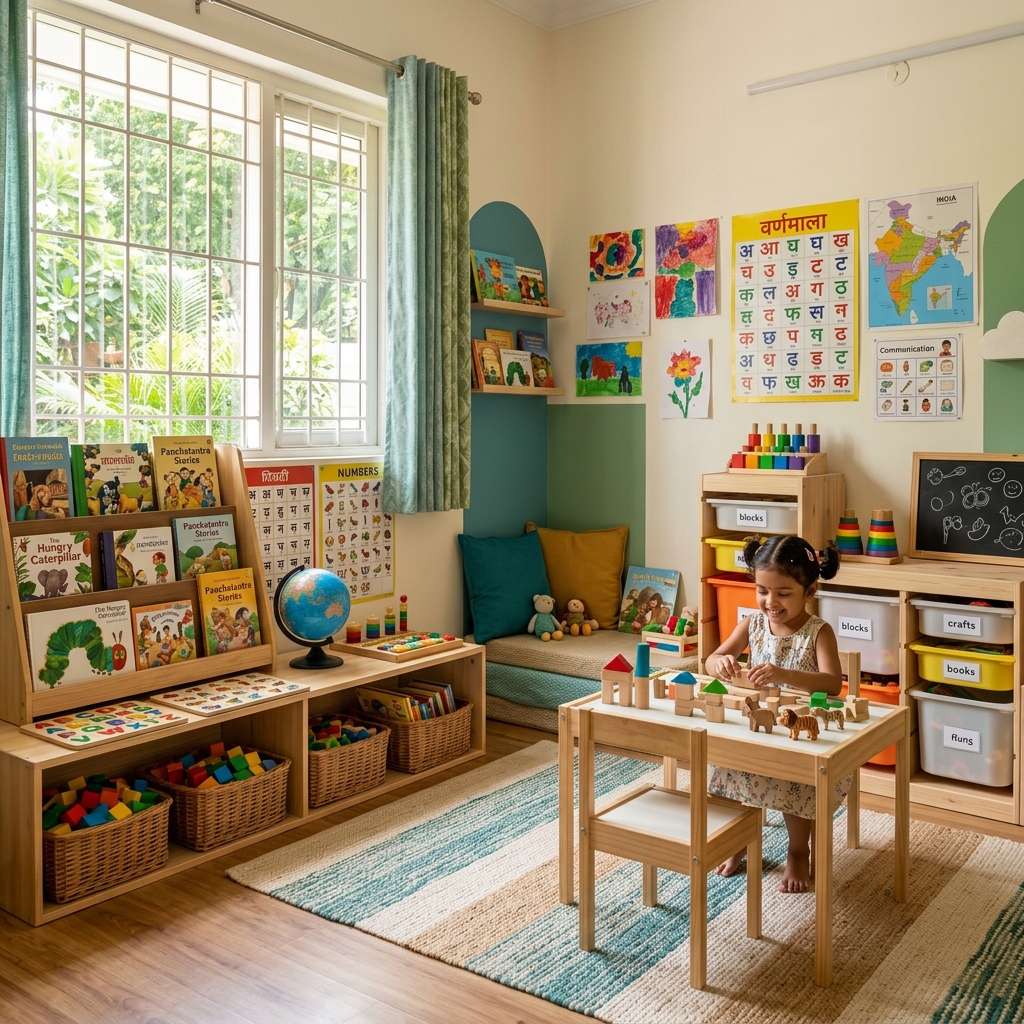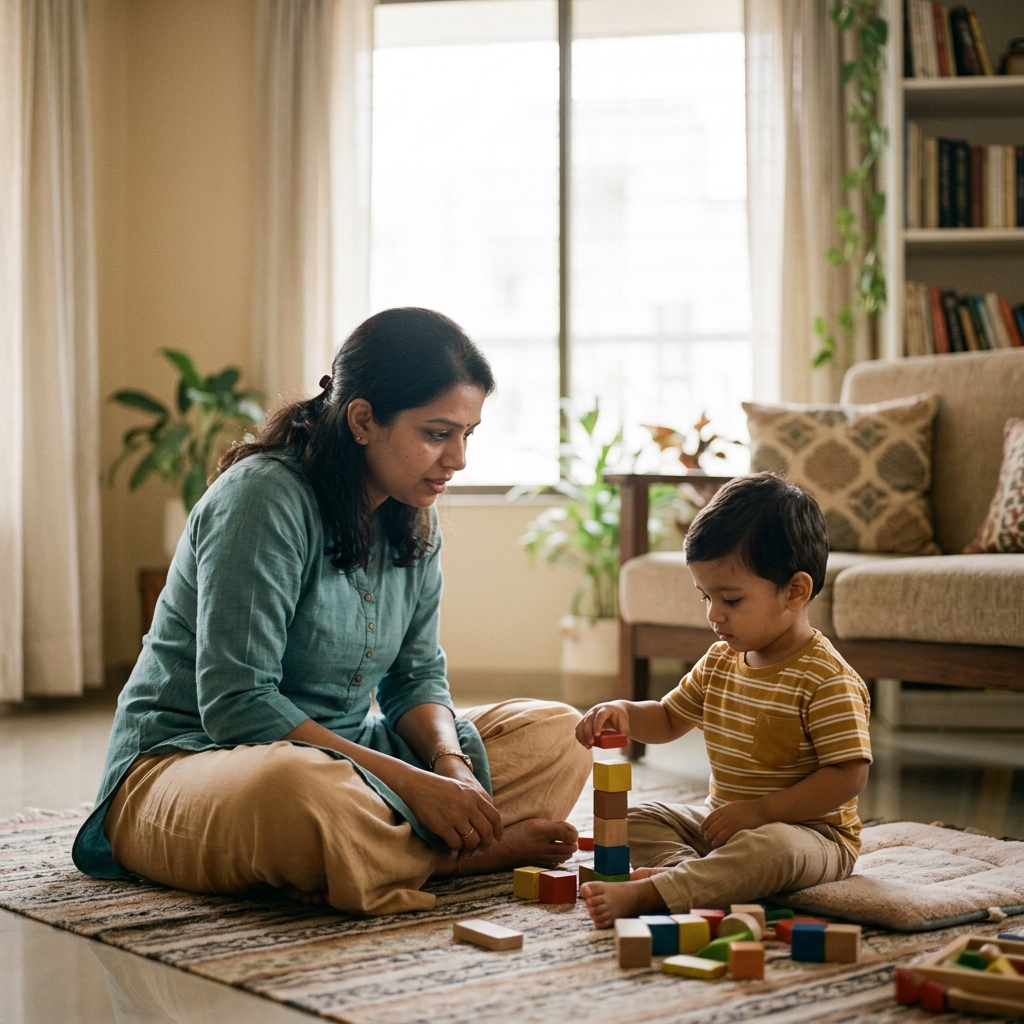
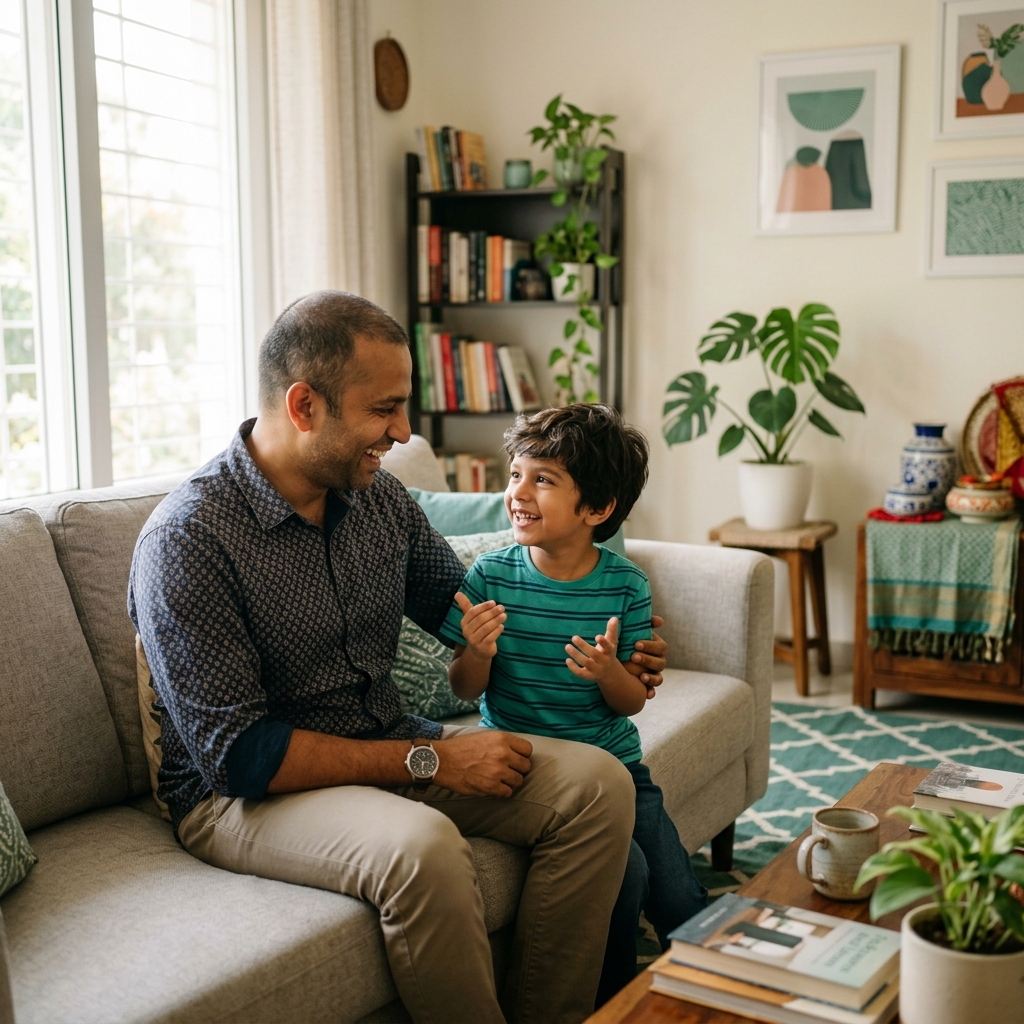
Communication starts from the place of comfort with the comfortable people, mainly with parents. From there it evolves differently. Some learn or catch the words, gestures, and emotions easily, like in a normal way, but some sound different. For them, the process of communication starts, goes, and reaches in a different way. With the right support and guidance it can be improved.
Parents are the warmest support in every child's communication journey. Many of them don't know how to communicate with their children. They give mere instructions "to do this and that" meanwhile they shed light on a friendly talk with them. Knowingly or unknowingly children wrap up their conversation with parents. They hold up their silent battles without communicating to them. But it can be reframed in a better way with better tips.
Learn and Grow With Your Child
Listen To Them
Children crave attention, they will be frustrated when they aren't heard. So get down to your child and speak while maintaining eye contact with them. This improves their confidence to talk with others while looking straight at their eyes.
When you actively listen, you send a powerful message: "What you say matters." This single habit alone can transform how your child perceives communication — from something that's ignored to something that's valued and reciprocated.
Ask Children Open-Ending Questions
Children are a book of stories, they have infinite fairy tales to say. Don't ask them questions that end with "yes" or "no." Instead ask them what, why, and how questions, which creates an opportunity to speak up the whole story rather than stopping in one or two words.
For example, instead of asking "Did you have fun at school?", try "What was the most exciting thing that happened at school today?" This opens the door for your child to narrate, describe, and share their world with you.
| Instead of This | Try This |
|---|---|
| "Did you eat lunch?" | "What did you eat for lunch today? How was it?" |
| "Was the movie good?" | "What was your favourite part of the movie? Why?" |
| "Did you play with friends?" | "What games did you play with your friends today?" |
| "Are you okay?" | "How are you feeling right now? Tell me about it." |
Read Them Stories
Books, stories, and journals will improve the vocabulary and pronunciation in children. Read them the stories with emotions and exclamations to create an ambience of imagination, where they can create their own imaginary characters, form ideas and thoughts.
Reading together isn't just about the words on the page — it's about the shared experience, the questions they ask, the way they predict what happens next, and the emotional bonds built during story time.
Activate Their Daily Journaling
Encourage them to do daily journals. To write about their daily happenings — good, bad, and sweet things. This will upgrade their writing skills and thinking potentiality.
Journaling helps children organise their thoughts, reflect on their emotions, and practice expressing themselves in a structured way. Even simple drawings with captions count for younger children who are still developing their writing skills.
Play With Them
Give them a situation and ask them to act this or that in their own way. The activity makes children active to do the roles and responsibilities in a better way.
Role-playing, puppet shows, building with blocks, and pretend cooking — all of these activities naturally stimulate language. When children play, they practice new words, experiment with sentence structures, and learn to negotiate and collaborate.
Use Excitements and Exclamations While Speaking
Children often say something to their parents in order to get compliments. They are expecting the "wow" response from the parents. Try to use it while your child says something interesting or big things happened during that day.
Example: When your child says: "Mom, I have completed the homework today by myself." Respond in this way: "Wow, that's amazing baby! Continue the same every day, I know you are a good girl!" These acknowledgements make them proud and uplift the relationship.
Be A Friend To Your Child
Communication is a continuous process, it develops in different ways. Some may face difficulties while going through it. But with the right support and guidance from parents it can be improved a lot.
- Stay positive, gentle, and kind to them. Incorporate do's and don'ts in a healthy way without hurting them.
- Be a friend that they can talk to and show all their vulnerabilities to you.
- Create a safe space where mistakes in speech are never criticised, only gently corrected.
- Celebrate small wins — every new word, every complete sentence, every story they tell is a milestone worth recognising.
Remember: your child's first and most important communication partner is you. The habits you build today become the foundation of their lifelong communication skills.
Need Professional Guidance?
If your child is struggling with communication, our experienced speech-language pathologists at Rapture Therapy Centre offer comprehensive assessments and personalised therapy plans. Early support makes a lasting difference.
Book a Consultation