The pandemic normalised online therapy — and it's here to stay. But is a screen-based session really as effective as sitting in a therapy room with a trained clinician? For Bangalore parents balancing traffic, work schedules, and multiple children, the convenience of teletherapy is appealing. Yet for many conditions, in-clinic therapy offers advantages that a screen can't replicate. Here's an honest comparison to help you choose the right format for your child.
Head-to-Head Comparison
| Factor | Online Therapy | In-Clinic Therapy |
|---|---|---|
| Convenience | ✅ No travel, flexible scheduling | Requires travel and fixed time slots |
| Cost | ₹600–₹1,200/session | ₹1,000–₹2,000/session |
| Access to equipment | Limited to home materials | ✅ Full therapy room, sensory equipment, specialised tools |
| Therapist observation | Limited view via camera | ✅ Full observation of body, posture, oral-motor function |
| Child engagement | Screen fatigue possible | ✅ Hands-on, multisensory engagement |
| Parent involvement | ✅ Parent naturally present | Parent may observe or join as needed |
| Geographical reach | ✅ Access therapists anywhere in India | Limited to local clinics |
| Distractions | Home environment distractions | ✅ Controlled therapy environment |
When Online Therapy Works Well
Online speech therapy is effective and appropriate in several scenarios:
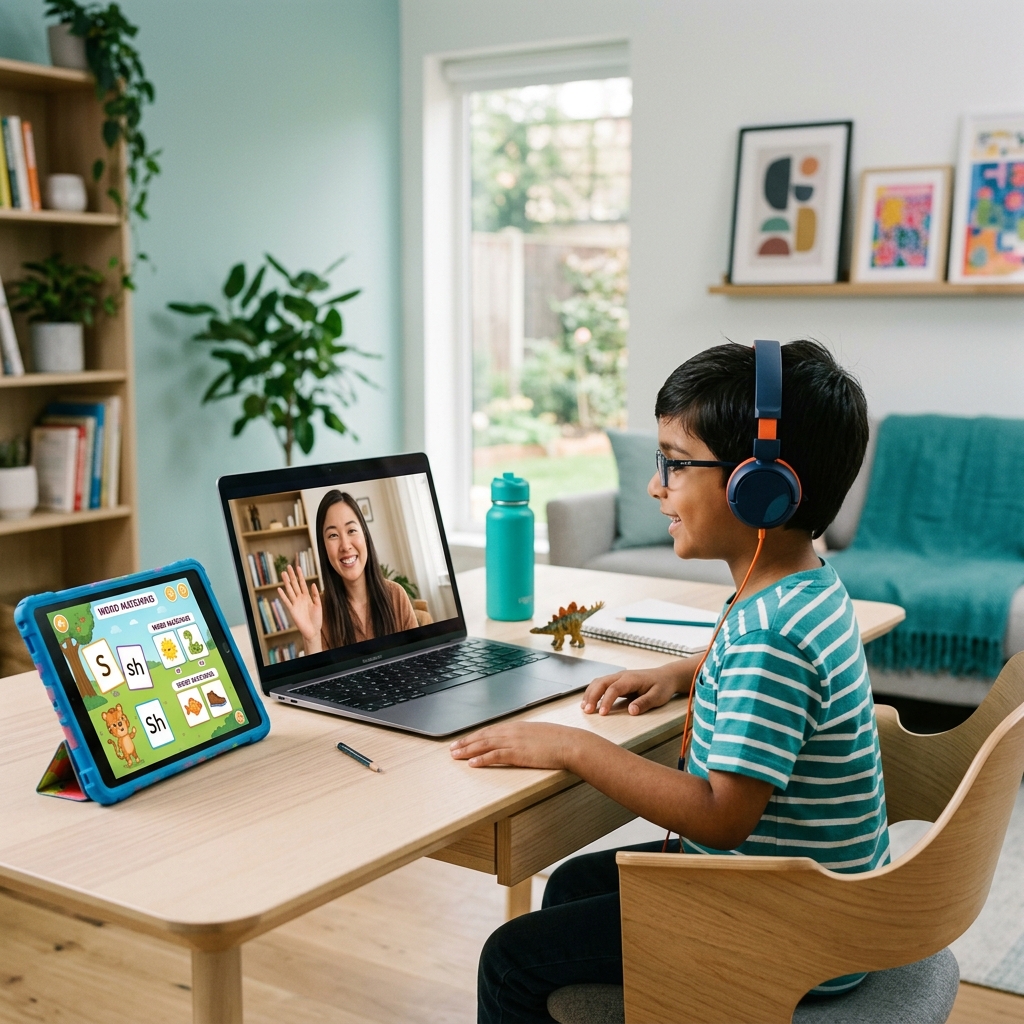
- Language therapy for children aged 4+: Children with good attention who respond to screen-based activities can make excellent progress with language goals — vocabulary, sentence structure, comprehension exercises
- Fluency (stuttering) therapy: Stuttering techniques are highly verbal and translate well to video sessions. Many adult stuttering programs are entirely online
- Follow-up and maintenance sessions: After initial in-clinic work, teletherapy can maintain progress during maintenance phases
- Parent coaching models: Programs where the therapist guides parents in real-time to implement strategies with their child are ideal for online delivery
- Remote or underserved areas: Families outside Bangalore city limits who don't have access to qualified therapists locally
- Children with anxiety: Some children are more comfortable in their home environment and engage better through a screen initially
When In-Clinic Therapy Is Essential
Certain conditions and therapeutic approaches require the physical presence of a skilled clinician:
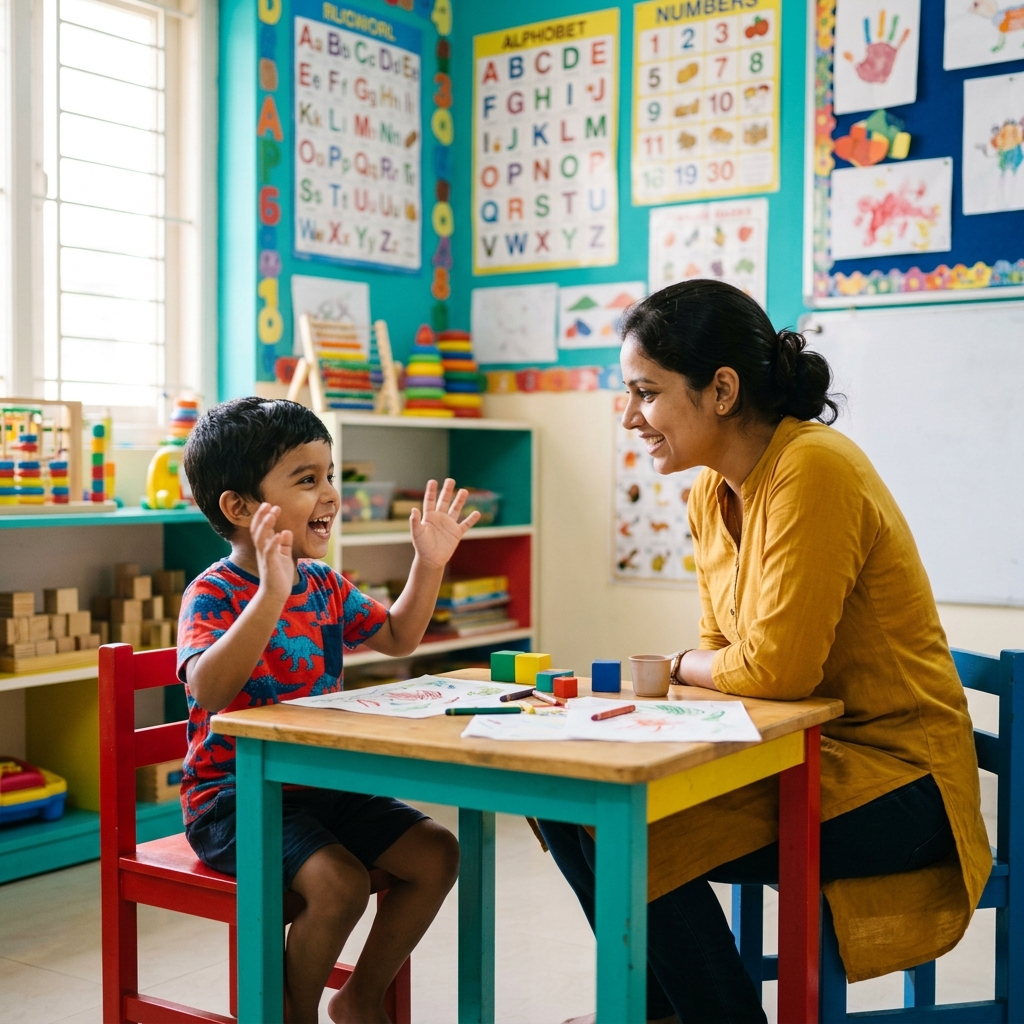
- Oral Placement Therapy (TalkTools): Requires hands-on manipulation of oral structures — a therapist must physically guide jaw, lip, and tongue movements. This cannot be done through a screen
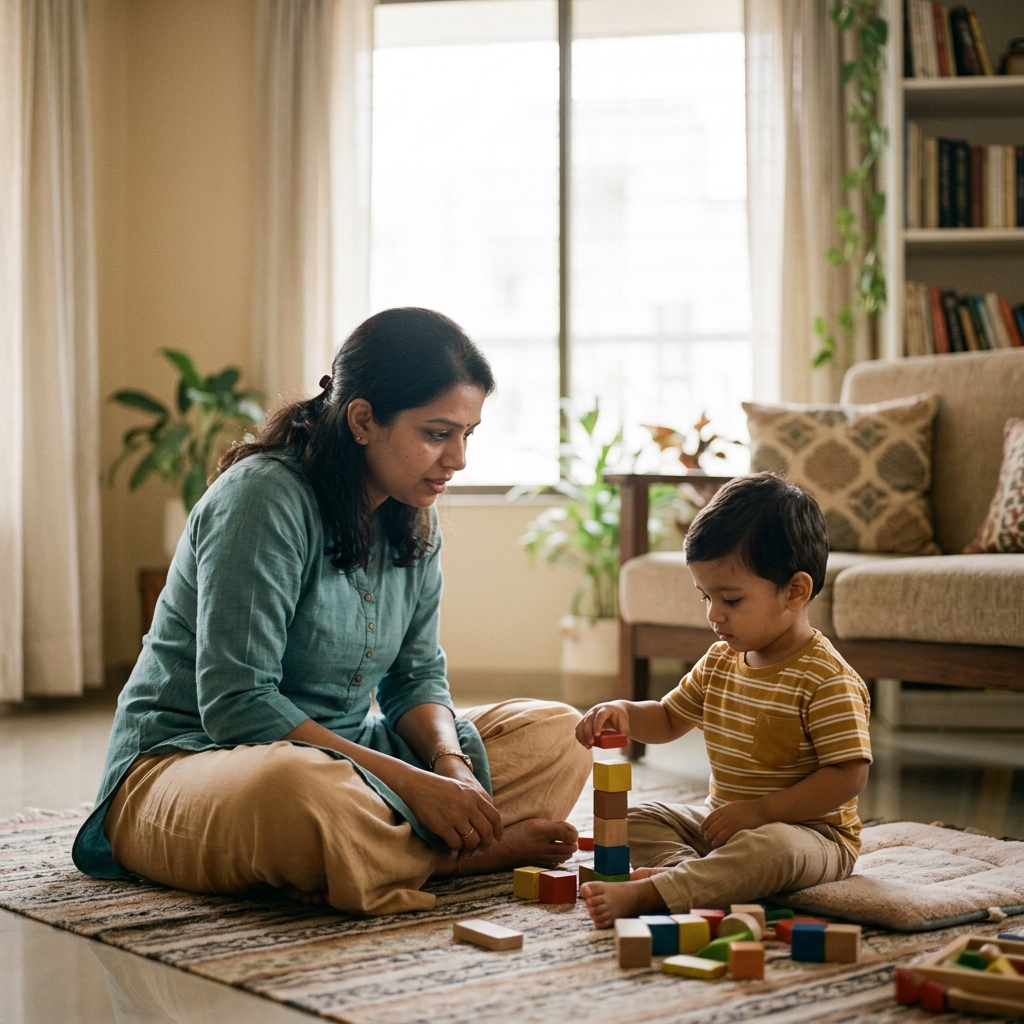
- Children under 3: Toddlers rarely have the attention span to engage with a screen. In-person, play-based therapy is far more effective at this age
- Sensory-based feeding therapy: Addressing food aversions requires real food, textures, and in-the-moment sensory grading that doesn't translate to video
- Severe articulation disorders or apraxia: The therapist needs to see the child's mouth closely, use tactile cues, and provide physical prompts
- Children with significant attention/behavioural challenges: Keeping a highly active or sensory-seeking child engaged through a screen is extremely difficult
- Initial assessment: A comprehensive evaluation almost always requires in-person observation and standardised testing
Research Note: A 2023 systematic review in the Journal of Telemedicine and Telecare found that online speech therapy produced comparable outcomes to in-person therapy for language intervention in school-aged children, but was less effective for articulation and motor-speech disorders that require tactile feedback.
The Hybrid Model: Best of Both Worlds
Many families find that a hybrid approach offers the best balance:
- In-clinic sessions for assessment, hands-on therapy, and new skill introduction
- Online sessions for practice, generalisation, and parent coaching between clinic visits
- Example schedule: 1 in-clinic session + 1 online session per week, or 2 in-clinic sessions with online check-ins fortnightly
This model reduces travel burden while ensuring the child gets hands-on intervention for skills that require it.
Cost Comparison for Bangalore Families
When calculating the true cost, factor in more than just session fees:
- Online total cost: ₹800–₹1,200/session (no travel, no parking, no time off work)
- In-clinic total cost: ₹1,200–₹2,000/session + ₹200–₹500 travel cost + 1–2 hours travel time in Bangalore traffic
- Hidden online costs: You may need to purchase therapy materials, a good webcam, or a quiet space — though these are usually one-time investments
For families in outer Bangalore (Electronic City, Whitefield, Yelahanka) travelling to a specialised clinic in a different zone, the travel savings from 2–3 online sessions per month can add up to ₹3,000–₹5,000 monthly.
How to Make Online Sessions More Effective
If you choose online therapy, set your child up for success:
- Dedicated space: Use the same quiet, well-lit area every session. Remove distractions (other screens, toys, siblings)
- Camera position: At the child's eye level, close enough for the therapist to see their face and mouth clearly
- Materials ready: The therapist will send a list of items needed before each session — have them prepared
- Parent support: For children under 5, an adult needs to be present to facilitate activities and follow the therapist's guidance
- Stable internet: Laggy connections disrupt the flow of therapy. A wired connection or strong Wi-Fi is essential
Our Approach at Rapture Therapy Centre
At Rapture Therapy Centre in Rajarajeshwari Nagar, we primarily offer in-clinic therapy because our specialisations — including Oral Placement Therapy, sensory integration, and early intervention — require hands-on clinical work. However, we support families with online follow-up sessions and parent coaching when appropriate, particularly for language-focused goals and families managing long commutes.
Find the Right Therapy Format for Your Child
Not sure whether your child needs in-person or online sessions? Book a consultation and our team will recommend the format that best fits your child's needs, your family's schedule, and your goals.
Book a Consultation