Every parent wonders at some point: "Is my child's speech development normal?" It's one of the most common concerns parents bring to our clinic. The truth is, children develop at different rates, and understanding what falls within the typical range can help you decide when it's time to simply observe — and when it's time to seek professional guidance.
Remember: Variation in development is normal. A child who starts speaking later than their sibling did is not automatically behind. However, knowing the general milestones gives you a framework to observe with confidence rather than worry.
What "Typical" Communication Looks Like
Communication development is far more than just "talking." It includes gestures, eye contact, understanding, social interaction, and the ability to express needs and emotions. Before a child says their first word, they're already communicating through crying, cooing, pointing, and shared attention.
Birth to 6 Months
During this stage, babies begin to recognise familiar voices, turn toward sounds, and respond to changes in tone. They start cooing and making vowel-like sounds ("oooh," "aaah"). Social smiling emerges, and they begin to engage in simple back-and-forth vocal exchanges with caregivers.
6 to 12 Months
Babbling becomes more complex, incorporating consonant-vowel combinations like "baba," "mama," and "dada." Babies start understanding simple words like their own name and "no." They begin using gestures — pointing, waving, reaching with arms — as intentional communication tools.
12 to 18 Months
First true words typically appear. Children may have 5 to 20 words and begin to understand simple instructions like "give me the cup." They use single words combined with gestures to make requests and comments about their world.
18 to 24 Months
Vocabulary expands rapidly, often reaching 50 to 200 words. Children begin combining two words ("more juice," "daddy go") and can follow two-step instructions. They show understanding of simple questions and can identify common objects and body parts.
| Age Range | Typical Communication Milestones |
|---|---|
| 0–6 months | Cooing, social smiling, responding to voice |
| 6–12 months | Babbling, responding to name, pointing |
| 12–18 months | First words, following simple commands |
| 18–24 months | 50+ words, two-word combinations |
| 2–3 years | Sentences, questions, understood by family |
| 3–4 years | Stories, complex sentences, understood by strangers |
When to Pause and Observe
Not every difference in development signals a problem. Some children are naturally more observant, taking in language before they produce it. Bilingual children may initially have a smaller vocabulary in each individual language but a combined vocabulary that's on track.
Here are situations where it's reasonable to pause, observe, and give your child a bit more time:
- Your child understands language well but is slow to speak — they follow instructions, point to objects, and engage socially
- Your child recently went through a major change (new sibling, moving house, starting daycare) and communication temporarily shifted
- Your child is bilingual and mixing languages or seems to be slower in one language
- Your child's older sibling "speaks for them," reducing their need to communicate independently
When to Seek Professional Help
While patience is important, there are clear signs that warrant a professional evaluation rather than a wait-and-watch approach:
- No babbling by 12 months — babbling is a critical precursor to speech
- No first words by 16–18 months — even if they seem to understand
- No two-word combinations by 24 months — "more milk" or "go outside" should be emerging
- Loss of previously acquired words or skills — regression is always a reason to consult
- Limited eye contact or social engagement — communication is deeply social
- Persistent frustration or behavioural outbursts related to inability to communicate
Pro Tip: Trust your instincts. You know your child better than anyone. If something feels off — even if others say "they'll grow out of it" — a professional evaluation provides clarity and peace of mind. Early intervention, when needed, leads to significantly better outcomes.
How to Support Communication at Home
Whether your child is developing typically or needs a little extra support, these strategies create a rich communication environment:
- Narrate your day: Talk through what you're doing — cooking, shopping, driving — using simple, clear sentences
- Follow their lead: When your child shows interest in something, talk about it. Their attention is already there
- Wait and give time: After asking a question, wait 5-10 seconds before jumping in. Processing time varies
- Expand on what they say: If your child says "car," you respond with "Yes! A big red car!"
- Reduce screen time: Interactive human communication builds language far more effectively than passive screen exposure
Wondering About Your Child's Communication?
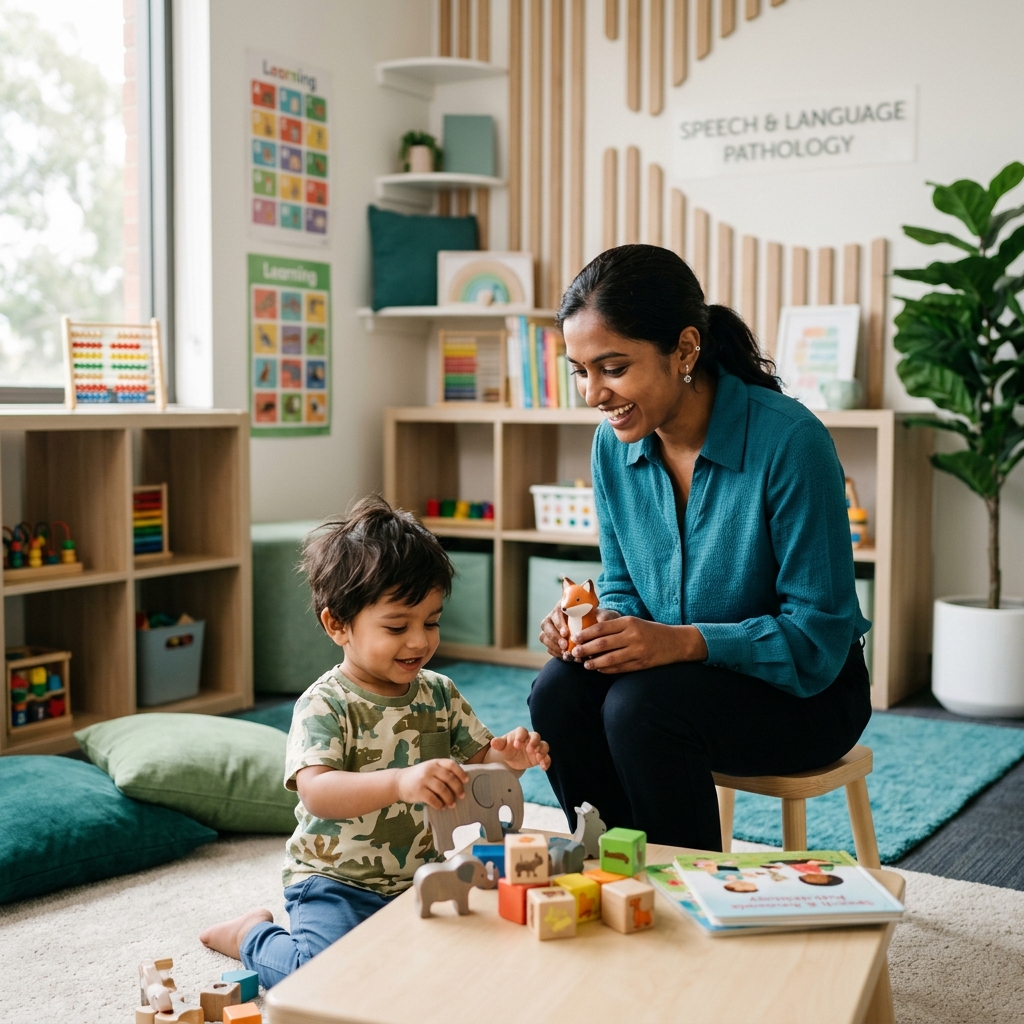
Our speech-language pathologists at Rapture Therapy Centre provide warm, play-based assessments that give you clear answers and actionable next steps. No judgement, just support.
Book a Communication Assessment