Does your child constantly run and crash into things, spin in circles, cover their ears at everyday sounds, or reject certain clothing textures? These behaviours may look like "high energy" or "fussiness" — but they can also be signs of sensory-seeking behaviour, a hallmark of sensory processing differences that many toddlers experience.
What Is Sensory Processing?
Every moment of every day, our brain receives information from our senses — not just the five we commonly think of (sight, hearing, touch, taste, and smell), but also from three "hidden" sensory systems:
- Proprioception — awareness of body position and movement (muscle and joint sense)
- Vestibular — balance and spatial orientation (inner ear)
- Interoception — internal body signals (hunger, fullness, temperature, need for the toilet)
Sensory processing is the brain's ability to receive, organise, and respond to all of this sensory information. When this system works well, a child can filter out background noise, tolerate different textures, and regulate their body in space. When there are differences in sensory processing, a child may be overwhelmed by some sensations or seek out intense sensory input to feel regulated.
Sensory-Seeking vs. High-Energy Play
All toddlers are naturally active and curious. So how do you tell the difference between typical high-energy play and sensory-seeking behaviour?
| High-Energy Play | Sensory-Seeking Behaviour |
|---|---|
| Running, jumping, climbing in appropriate contexts (playground, garden) | Running, crashing, and climbing constantly — even in calm settings like a library or dinner table |
| Gets excited during active play, then settles down | Cannot settle even after extended active play; seems to need more and more input |
| Explores textures and messy play with curiosity | Constantly mouths objects, smears food, or seeks deep pressure (squeezing, crashing) |
| Enjoys spinning on a roundabout, then moves on | Spins themselves repeatedly without getting dizzy or wanting to stop |
| Responds to "stop" or "be gentle" | Difficulty stopping the behaviour even when asked; seems driven by an internal need |
Common Signs of Sensory-Seeking in Toddlers
A child who is sensory-seeking may show some of the following patterns across their day:
Movement and Body
- Constantly jumping, bouncing, or rocking
- Crashing into furniture, walls, or people on purpose
- Spinning in circles without getting dizzy
- Seeking tight spaces (hiding under cushions, squeezing behind furniture)
- Difficulty sitting still during meals or quiet activities
Touch and Texture
- Constantly touching people, objects, and surfaces
- Mouthing or chewing non-food items (clothing, toys, fingers) beyond the typical age
- Seeking messy play (paint, mud, water) intensely
- Wanting very tight hugs or deep pressure
Sound and Visual
- Making loud noises, banging objects, or shouting
- Fascinated by spinning objects, flickering lights, or moving patterns
- Turning volume up very high on devices
Sensory Avoidance: The Other Side
While some children seek extra sensory input, others avoid it. A child who is sensory-avoidant may:
- Cover their ears at sounds others find normal (hand dryers, vacuum cleaners, flushing toilets)
- Refuse to wear certain clothing due to tags, seams, or fabrics
- Become very distressed with messy textures (paint, sand, certain foods)
- Avoid playground equipment or being picked up
- Have a very limited diet, rejecting foods based on texture
Many children show a mixed pattern — seeking input in some areas while avoiding it in others.
What is a "sensory diet"? A sensory diet is a personalised plan of physical activities and sensory input designed by an occupational therapist to help a child stay regulated throughout the day. It's not about food — it's about providing the right type and right amount of sensory input at the right times.
When Should You Consult an Occupational Therapist?
Consider seeking an occupational therapy assessment if your toddler's sensory behaviours:
- Interfere with daily routines (meals, dressing, sleeping, outings)
- Cause safety concerns (constantly crashing, climbing dangerously, running away)
- Lead to frequent meltdowns in response to sensory experiences
- Affect their ability to participate in play with other children
- Impact learning and attention (cannot sit for a story, follow instructions, or engage in tabletop activities)
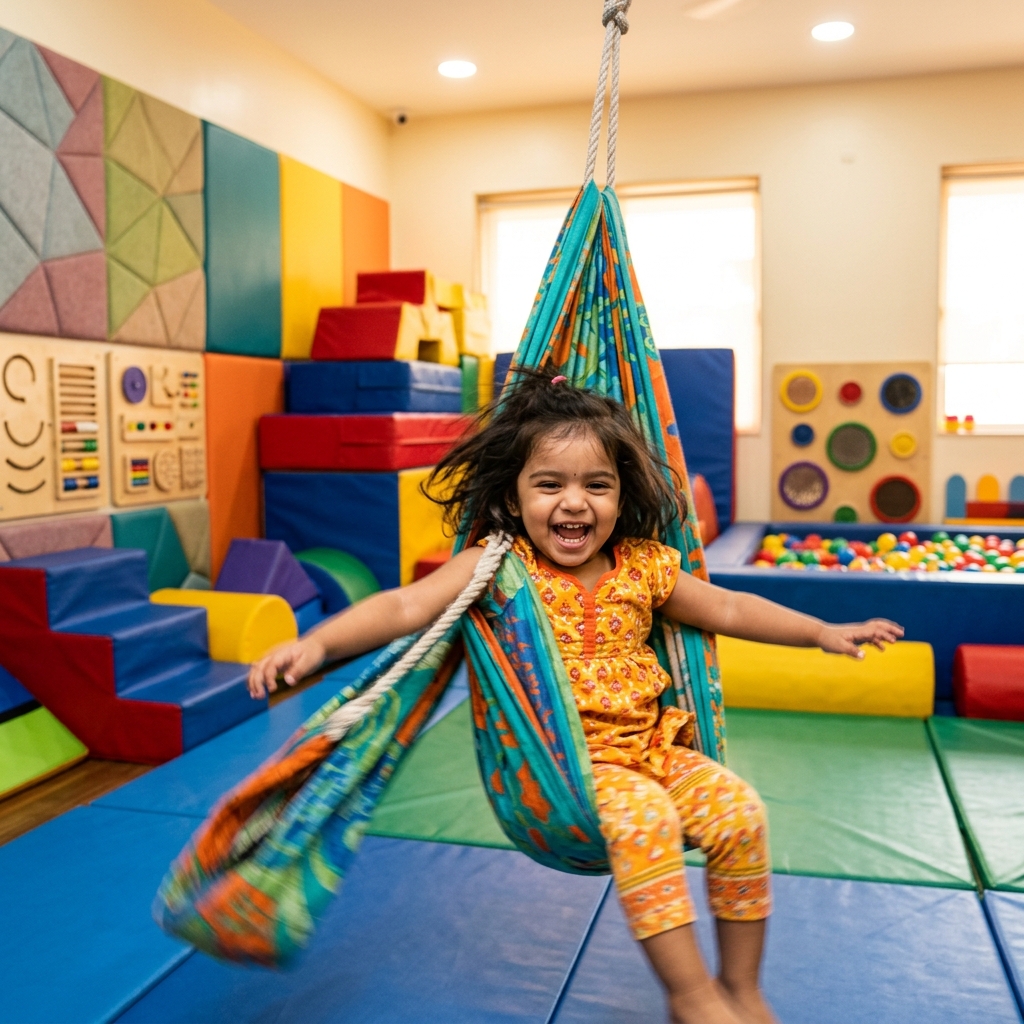
At Rapture Therapy Centre in Rajarajeshwari Nagar, Bangalore, our occupational therapists specialise in sensory integration therapy. We provide comprehensive sensory assessments and design individualised sensory diets and therapy programs to help your child process sensory information more effectively.
Worried About Your Child's Sensory Behaviour?
Our occupational therapists at Rapture Therapy Centre can conduct a thorough sensory profile assessment and create a tailored sensory integration plan for your child.
Book an Assessment