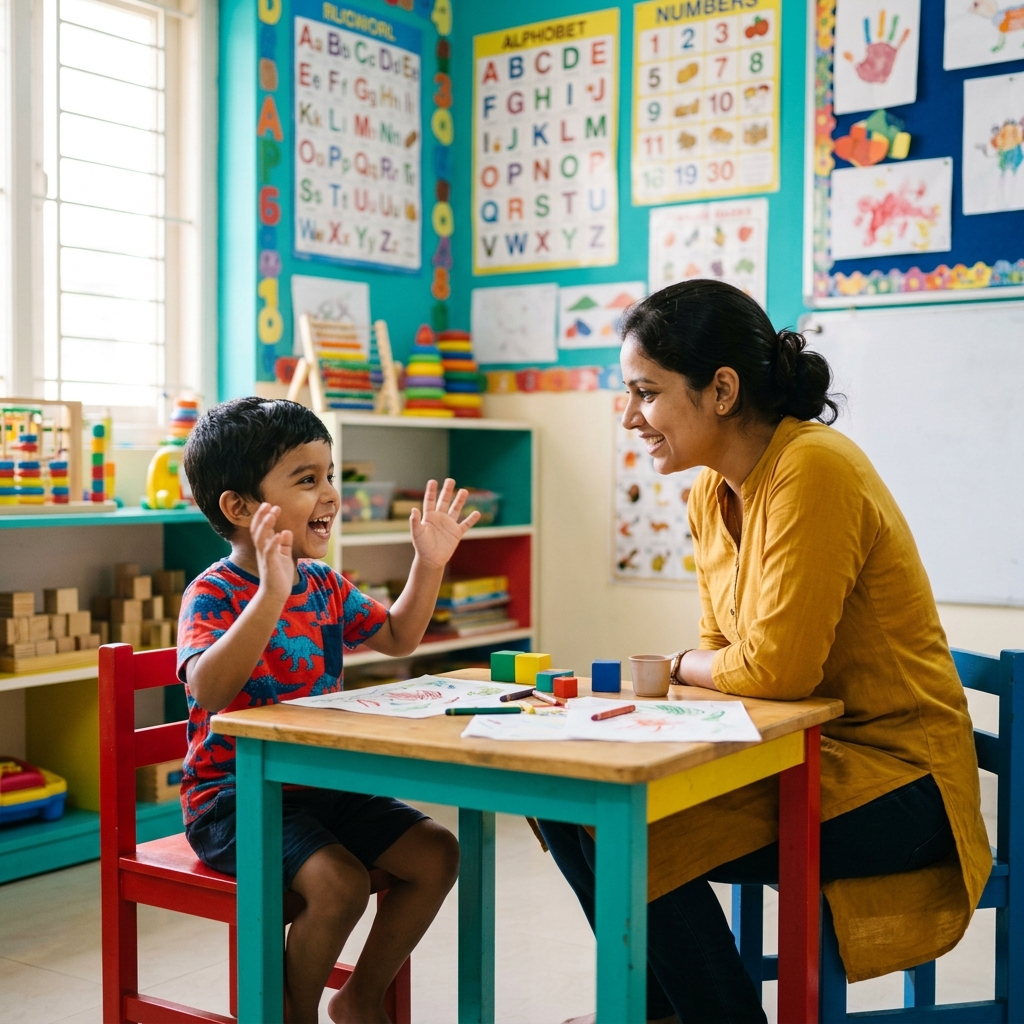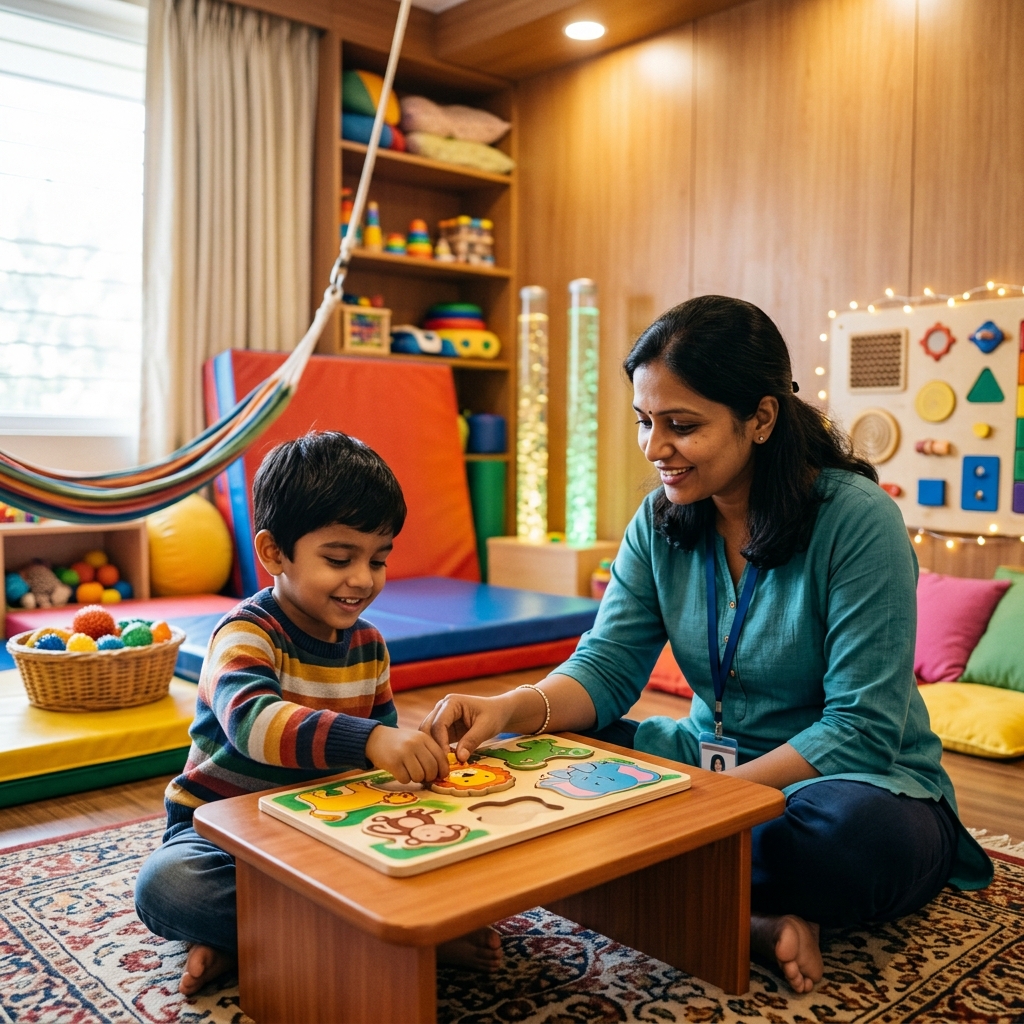

If your child repeats lines from their favourite TV show, recites phrases from books in seemingly random moments, or uses complete sentences before they use single words — they may be a Gestalt Language Processor (GLP). Far from being "just echolalia," this is a valid and increasingly recognised pathway to language development that many children, including many autistic children, follow.
What Is Gestalt Language Processing?
Most people are familiar with the "analytic" pathway of language development — the one described in textbooks. Children start with single words ("mama", "ball"), combine them into two-word phrases ("more milk"), and gradually build longer, more complex sentences. This is how analytic language processors learn.
Gestalt Language Processors do the opposite. They start by acquiring language in large, whole chunks — entire phrases, sentences, or intonation patterns — and then gradually break them down into smaller, more flexible units. The term "gestalt" refers to the idea of perceiving a whole pattern before understanding its individual parts.
This is not a disorder. Gestalt Language Processing is a natural language development style. Research by Marge Blanc and others has shown that many children — estimated at up to 75% of autistic children — acquire language through this pathway. It requires a different therapeutic approach, but the underlying process is just as valid as analytic language development.
The Stages of Gestalt Language Development
The Natural Language Acquisition (NLA) framework, developed by Marge Blanc, identifies stages that Gestalt Language Processors move through:
| Stage | What It Looks Like |
|---|---|
| Stage 1 | Whole gestalts (echolalia). The child uses entire phrases or scripts with rich intonation, often from TV shows, songs, books, or things adults have said. Examples: "Let's go to the park!" (meaning they want to go outside), "Oh no, what happened?" (used any time something falls). |
| Stage 2 | Mixing and matching. The child begins to combine parts of different scripts together. They may mix the beginning of one gestalt with the end of another. Example: "Let's go to... the bubbles" (combining a familiar phrase with a new word). |
| Stage 3 | Single words and two-word combinations. The child breaks gestalts down into individual words and begins recombining them in novel ways. This stage looks similar to where analytic processors start. |
| Stages 4–6 | Grammar and complex sentences. The child begins using grammar rules, adding word endings, and building original sentences — just like any other child, but arriving here through a different route. |
How to Recognise a Gestalt Language Processor
Your child may be a Gestalt Language Processor if they:
- Repeat lines from TV shows, songs, or books and use them meaningfully in context
- Use long, complex phrases before using single words
- Have rich intonation patterns that sound "adult-like" or "musical"
- Use the same phrase to mean the same thing each time (e.g., always saying "ready, set, go!" when they want to start something)
- Seem to "echo" what others say (immediate or delayed echolalia)
- Can recite entire passages or scripts with perfect intonation
How to Support Your Child at Home
Here are practical strategies parents can use to support gestalt language development in everyday play:
1. Acknowledge and Validate Their Language
When your child uses a script or echoes a phrase, don't dismiss it. Try to understand what they are communicating. A child who says "Swiper, no swiping!" might be telling you they don't want something taken away. Respond to the intent, not just the words.
2. Model Easy-to-Mitigate Gestalts
Use short, emotionally rich phrases that are easy for your child to pick up and later break apart:
- "Oh wow!" — exclamation they can use in many contexts
- "Let's go!" — short, versatile, and easy to combine later
- "I see it!" — can later break into "I see..." + new object
- "That's so cool!" — emotional and applicable to many situations
3. Narrate With Feeling
Gestalt processors are drawn to intonation and melody. Narrate your child's play with varied, expressive intonation — not in a flat, instructional tone. Make your language feel alive.
4. Follow Their Lead in Play
Join your child in their play — don't redirect them to yours. If they're lining up animals, narrate it: "Here comes the cow! Moo moo!" These play-based phrases become the raw material for their language development.
5. Don't Force Single Words
Avoid pressuring a GLP child to "say the word" or to drop their scripts. Their scripts are their language. Over time, with the right support, they will naturally begin to break them down into smaller, more flexible units.
What NOT to do: Don't tell your child to "use your own words" or "stop repeating." Their echoed phrases carry meaning and emotion. Dismissing them can shut down communication. Instead, expand on what they say: if they say "to infinity and beyond!" while jumping, respond with "you're jumping so high!"
When to Seek Professional Support
A speech-language pathologist (SLP) trained in the NLA framework can help identify your child's current stage of gestalt language development and design therapy to support them in moving through the stages naturally. Seek support if:
- Your child is stuck at Stage 1 (only using whole scripts) for an extended period
- You're unsure what their scripts mean or how to respond
- Communication breakdowns are causing frustration or behavioural challenges
- Other professionals have suggested your child's echolalia is "non-functional" — a trained GLP therapist can help reframe this
At Rapture Therapy Centre in Rajarajeshwari Nagar, Bangalore, our speech-language pathologists are experienced in supporting children with Gestalt Language Processing. We use the NLA framework alongside play-based therapy to help children progress through their language development stages naturally and joyfully.
Is Your Child a Gestalt Language Processor?
Our team can assess your child's language development style and create a therapy plan that honours their natural communication pathway — supporting them to build flexible, spontaneous language.
Book an Assessment